Connecticut Hospitals Basics
Connecticut has 26 acute care hospitals that are regulated by state, federal, and non-governmental agencies. Hospitals are increasingly merging with each other and with provider practices into large health systems. These large health systems are raising the prices for care through market power, with no improvement in quality, and closing unprofitable services. Hospital and health system prices are a major driver of rising healthcare costs in Connecticut.
The quality of hospital care in Connecticut is average overall, with some serious areas of concern, especially wait times in emergency departments. Seventeen of Connecticut’s 26 hospitals had positive 5-year margins (profits), averaging 3.87% from 2020 through 2024. In 2024, net profits (including losses) for all 27 hospitals were over $669 million. In 2024, Connecticut’s acute care hospitals spent 28% of their budgets on direct patient care labor on average, down from 32% in 2022.
Connecticut hospital payment rates for commercial plans average 2.17 times Medicare rates, which are set to cover reasonable costs. Connecticut hospitals assert that lower Medicaid rates drive up private insurance prices, but overwhelming evidence does not support that assertion. Connecticut hospital Medicaid rates are above neighboring state rates.
Due to past lax state oversight, private equity investors were able to severely weaken three hospitals in the state. Since the company declared bankruptcy and left Connecticut, the state has devoted significant resources to repairing the damage and revised policies to avoid future problems.
Most Connecticut hospitals are designated non-profit organizations. In return for this lucrative designation, they are required to identify the benefits they provide to improve the health of their communities. Some Connecticut hospitals provide significant community benefits. However, in 2024, Connecticut hospitals received more in tax breaks than they paid out in charity care and community investment.
Key issues facing hospitals and health systems center on reductions in federal Medicaid funding due to federal cuts. The expected rise in uninsured patients that cannot pay their bills will likely increase uncompensated care costs. Recognizing this, in 2026 the state granted Connecticut hospitals an increase of $1.7 billion over the next five years.
Connecticut Hospitals Deeper Dive
Connecticut’s hospital and health system landscape
There are 26 acute care hospitals in Connecticut that offer short-term care for severe illness. Other hospitals provide care for long-term conditions, rehabilitation, mental health care, surgery, and other specialized care. One acute care hospital, CT Children’s Medical Center, serves only children and the West Haven VA Medical Center only serves US military veterans. Academic medical centers are major teaching hospitals that are integrated with medical schools.
Most Connecticut hospitals are nonprofit institutions. Nonprofit status comes with more responsibility to improve the health of their community, but also comes with significant financial benefits. Researchers estimate that in 2021 Connecticut hospitals received over $607 million in breaks on federal, state and local income, sales, and property taxes. Taxpayers must pay more to cover those losses.
Like the rest of the country, Connecticut’s healthcare market is consolidating into large health systems. A health system is a network consisting of at least one hospital and one group of physicians, who provide comprehensive primary and specialty care to a community, and are connected to each other and the hospital through joint management or ownership.
Hospital mergers into systems are growing quickly in our state (horizontal consolidation) and Connecticut physicians are increasingly joining large health systems (vertical consolidation). Fewer hospitals and practices are not affiliated with one of the large health systems. While this consolidation started years ago, the financial and administrative pressures of COVID accelerated the trend.
A 2024 report from the state Office of Health Strategy found that between 2013 and 2021, consolidation in the market eliminated competition for twelve hospitals making them more profitable. This increased their market power to raise prices for commercial insurance plans. They also increased use of profitable services and reduced provision of less profitable care.
For more on consolidation and its impacts on Connecticut, visit our Healthcare Consolidation page.
Large health systems have added to the stress on independent Connecticut hospitals. Smaller health systems and independent hospitals struggle to hold onto their patients and staff. In 2022, St. Francis Hospital filed a lawsuit against Hartford HealthCare claiming that the large health system used anticompetitive practices to create a monopoly on inpatient hospital services and charge higher rates. Since then, two additional class action lawsuits, one on behalf of consumers and another by health plans, have been filed against Hartford HealthCare for anticompetitive behavior. St. Francis and Hartford hospitals settled their suit in 2025.
The American Hospital Association claims that the consolidation of care through a merger or acquisition can result in decreased cost and increased quality of care, additional resources for patients, and highly trained providers. However, the Federal Trade Commission stated “Many of the purported benefits of hospital mergers—including coordination of patient care, sharing information through electronic medical records, population health management, risk-based contracting, standardizing care, and joint purchasing—can often be achieved through alternative means that do not impair competition.”
Labor and delivery services are one example of consolidation lowering access to care. Rural hospitals often serve a substantial low-income population from diverse ethnic and racial backgrounds. Cutting rural labor and delivery services poses a safety risk for these mothers and babies and fails to address the ethnic, racial, and economic disparities that exist in many rural communities.
Hospitals and health system regulation
Hospital and health system regulation in Connecticut is split between federal and state agencies as well as private accreditation organizations. This allows agencies to protect the public under their different scopes and areas of expertise, however it can allow problems to fall into the gaps between agencies.
State regulation and oversight of Connecticut hospitals is divided between several agencies. In Connecticut, hospitals require licenses to operate from the state Department of Public Health (DPH). DPH also investigates complaints about hospitals and their services. They must also be certified by the Department of Social Services (DSS) to provide care for Medicaid patients.
Certificate of Need (CON) is a state regulatory process for hospitals and health systems that requires state approval prior to making major changes like mergers, large financial investments in equipment or facilities like an MRI or an ambulatory surgery center, changing patients’ access to services, or suspending a medical service.
In addition, hospitals and health systems are required to submit a great deal of financial data to the state. The state publishes an annual report on Connecticut hospital financing. The state also monitors total healthcare spending in the state. As hospital costs are a main driver of rising healthcare costs, the state has called hospital and health system leadership into public meetings to explain their rising prices and describe what they are doing to control costs.
As of this writing in May 2026, the state plans to move various functions, including CON and hospital financial reporting, from the Office of Health Strategy (OHS) to other agencies and dissolve OHS.
Several federal agencies also regulate hospitals. The Centers for Medicare and Medicaid Services (CMS) must certify hospitals that serve Medicare or Medicaid patients. Most Connecticut hospitals are nonprofits, so they are also regulated by the Internal Revenue Service to ensure they serve a public interest and improve community health. Several other federal agencies have some responsibility for regulating hospitals.
Anti-trust concerns, when health systems become large enough to distort the market causing unjustified price hikes, are regulated by both state and federal agencies. The Federal Trade Commission (FTC) and the Department of Justice (DOJ) enforce federal anti-trust laws. Connecticut’s Attorney General also has anti-trust authority under both state and federal laws.
Hospitals must also be accredited by independent organizations, depending on the services they provide. The largest is The Joint Commission which performs a detailed assessment, including unannounced on-site surveys, of each hospital’s performance compared to evidence-based standards of safety and quality. Hospitals must be re-accredited every three years.
Hospitals and health systems performance
According to the Commonwealth Fund 2025 State Scorecard, Connecticut ranks 48th among states in avoidable hospital use and cost, and is getting worse. That was our worst performance area by far, among seven dimensions. For seniors, we are 47th in the nation in avoidable ED visits, 31st in hospital admissions for preventable conditions, and 45th for hospital readmissions. This is despite spending more per Medicare beneficiary than all but seven states.
According to Medicare’s Care Compare, Connecticut’s hospitals are about average (3.4 of 5 stars on average) but with significant variation among hospitals.

Connecticut hospitals, shown below, vary in the percent of patients who have an unplanned readmission to the hospital within 30 days after discharge, according to an analysis by Mathematica, using data on health systems from the federal Agency for Healthcare Research and Quality.
The Excess Readmission Ratio (ERR) is calculated as the ratio of each hospital’s 30-day unplanned readmissions divided by the expected number of readmissions among similar hospitals. Hospitals with above average ERRs (over 1.0) are penalized by Medicare.
The data is broken down by condition — Acute Myocardial Infarction (AMI), Coronary Artery Bypass Graft (CABG) Surgery, Chronic Obstructive Pulmonary Disease (COPD), Heart Failure (HF), Elective Primary Total Hip Arthroplasty and/or Total Knee Arthroplasty (THA/TKA), and Pneumonia (PN). The median ERR across all Connecticut hospitals is above the predicted level (1.0) for every condition.

(shared with permission)
Wait times at Connecticut hospital emergency departments (EDs) are among the worst in the nation. At 191 minutes, the average (median) wait time at Connecticut’s hospital emergency departments (EDs) was tied with New York for 4th worst among states. Maryland was the highest at 247 minutes. The data from the federal Centers for Medicare and Medicaid Services (CMS) covers April 1, 2024 through March 31, 2025.
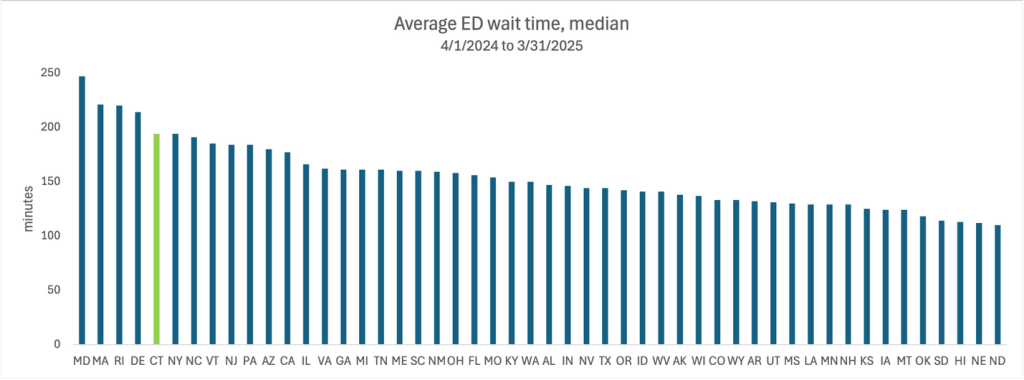
According to CT Public Radio, the cause isn’t too many people using the ED for non-emergency issues. The problem is that many “boarding” patients, waiting for care in another part of the hospital, are left to wait in the ED, often on a bed in a hallway. According to CT Public, “Doctors say overcrowding in the ER is a public health crisis that can result in delays in care, missed diagnosis, harm to patients and even death.”
A December 2024 report by a state taskforce of hospital clinicians made recommendations to fix the problem, including measuring transfer times from EDs, creating ED discharge units to improve the process, a plan at each hospital to lessen wait times, and protections for staff when EDs become over-crowded.
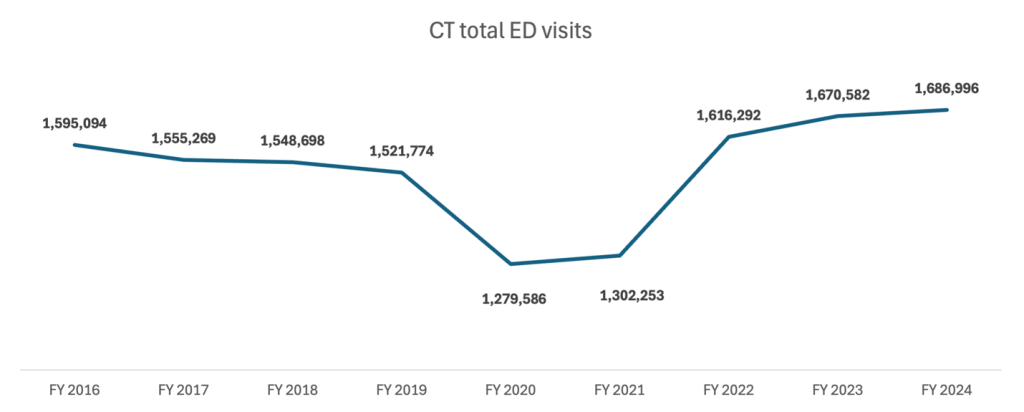
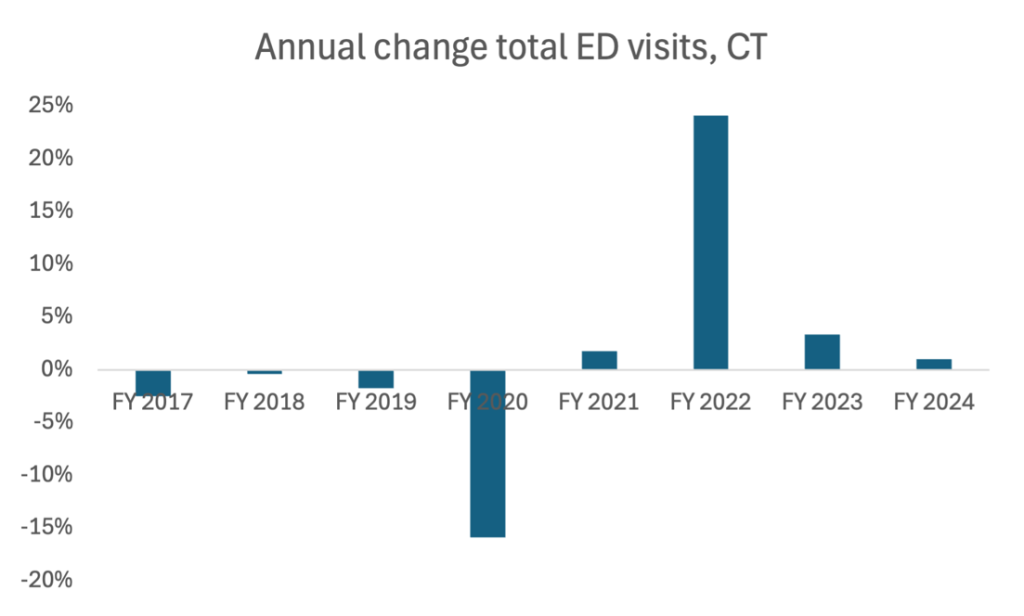
There were over 1.6 million ED visits to Connecticut hospitals in Fiscal Year 2024, about 1% higher than the year before, surpassing pre-COVID levels.
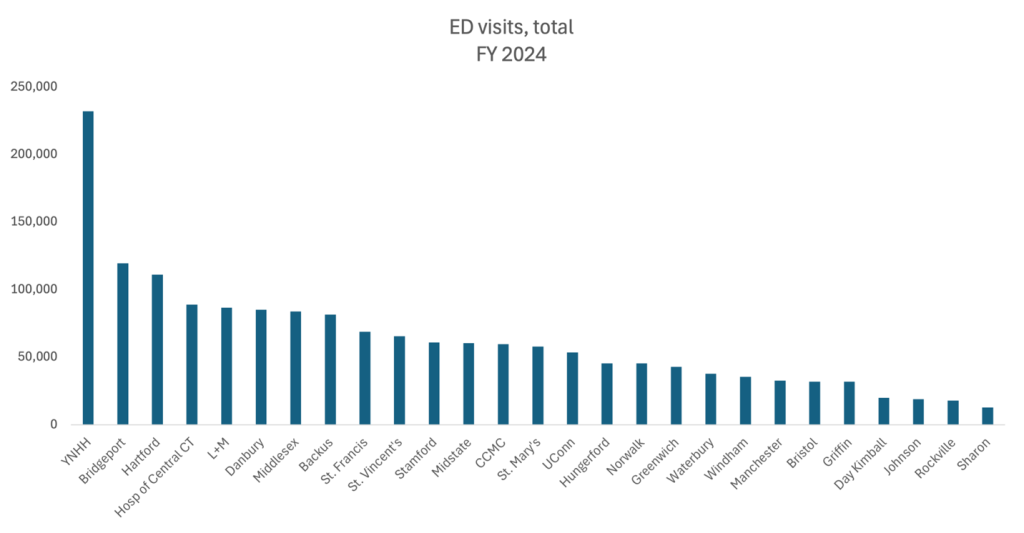
With 231,797 ED visits, Yale-New Haven had the highest number among Connecticut hospitals in 2024, by far. Yale-New Haven’s ED total was more than the next two highest hospitals, Hartford and Bridgeport hospitals, combined. With 12,817 ED visits, Sharon had the lowest level.
The 2023 National Healthcare Quality and Disparities Report from the Agency of Healthcare Research and Quality ranks the quality of care in Connecticut as average. Across 189 measures of quality, Connecticut was above the US average on 44, below average on 42, and average for the remaining 103. In addition, progress is slow. Compared with baseline years for each measure, we improved on 85 measures and got worse on 57.
Connecticut does well in Medicaid and Medicare Advantage patient satisfaction. We are also above average in preventive care – vaccines and screenings – as well as cancer deaths and the health of people living with HIV. However, we are below average in multiple metrics in home health, hospice, and nursing home care. We also have higher than average rates of deaths per hospital admissions for a variety of conditions.
Hospital finance
Hospital services are paid through government programs like Medicare and Medicaid, through private insurance including individual, small group, and employer plans, and directly out-of-pocket by patients. Care for those without insurance is partially reimbursed by state and federal governments — the rest is absorbed by the hospital/health system as charity care and bad debt, called uncompensated care.
According to the Office of Health Strategy, hospitals and their health systems are a major driver of rising healthcare costs in Connecticut. In their latest report, from 2023 to 2024, Connecticut hospital inpatient and outpatient costs per person rose by 7.2% and 9.7%, respectively. In comparison, US general inflation rose just 2.9% over that same year.
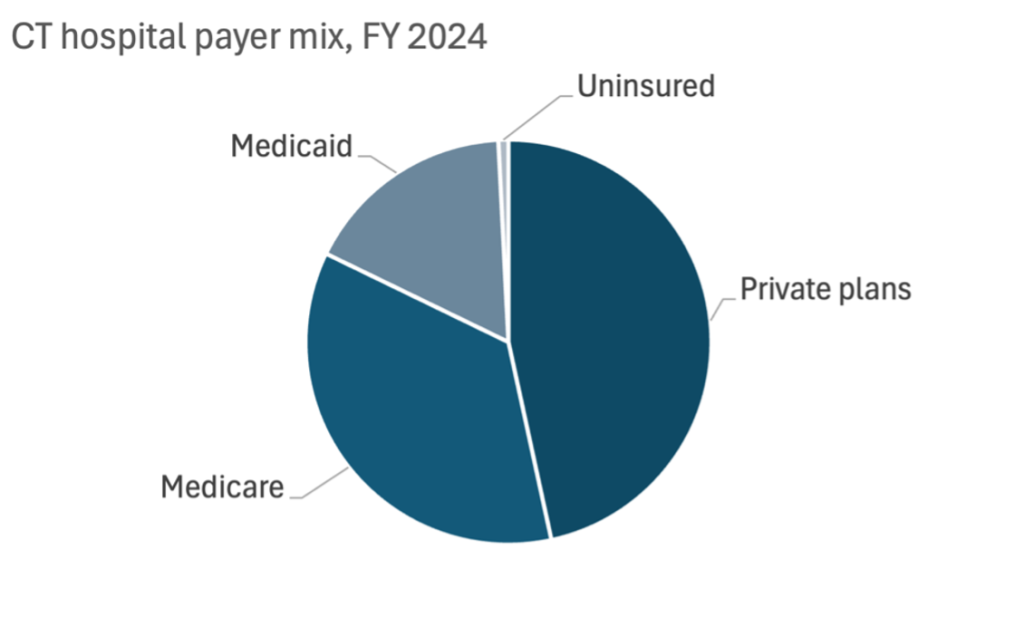
According to the Office of Health Strategy, in FY 2024, at 46.6% private plans (such as insurers and employers) were the largest funder of Connecticut hospital bills. Medicare funded 35.6% of bills, followed by Medicaid (state medical assistance) at 17.0%, and the uninsured at 0.8%.
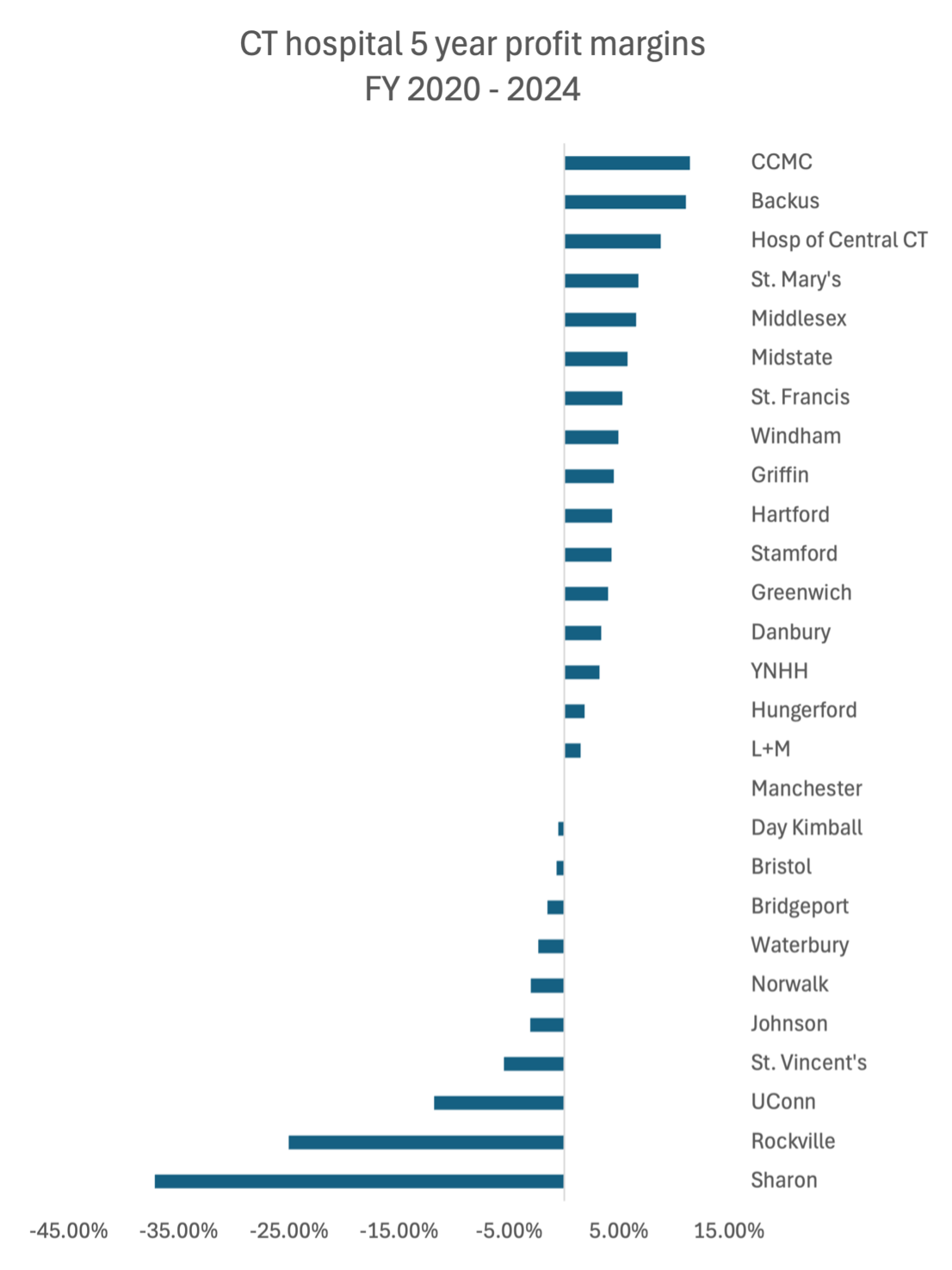
Seventeen of Connecticut’s 27 hospitals had positive 5-year margins (profits) from 2020 through 2024. Profits/losses across all Connecticut hospitals was +3.19% for the five years. In 2024, net profits (including losses) for all 27 hospitals were over $669 million.
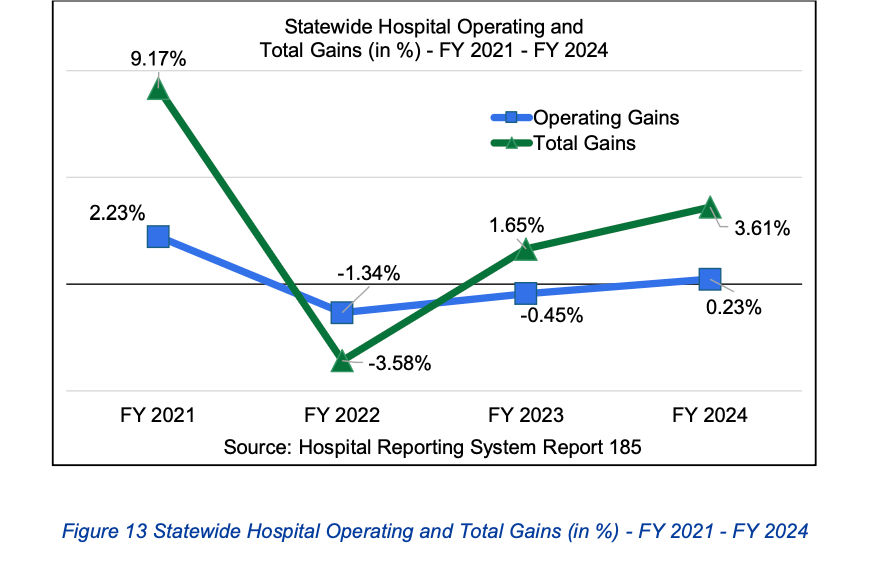
While Connecticut hospitals lost money in 2022, they were profitable in 2021, 2023, and 2024.
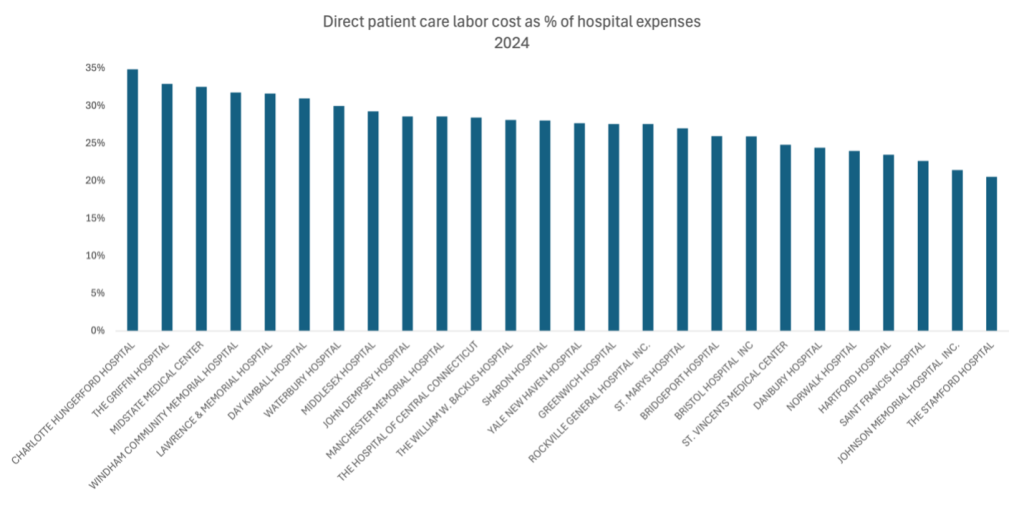
Analysis of the latest data from NASHP’s Hospital Cost Tool finds that, Connecticut hospitals averaged 28% of total spending on labor related to patient care in 2024. This is down from 32% in 2022. Connecticut hospitals varied in how much of their budget they devoted to patient care labor. Charlotte Hungerford spent the most at 35%, while Stamford Hospital spent the least at 21%.
A study from the Lown Institute finds all but two Connecticut hospitals are more efficient than the median US hospital within 30 or 90 days after admission. However, no Connecticut hospitals are in the top 10 most efficient in the nation. Greenwich and Bridgeport Hospitals are the most efficient in Connecticut. UConn and St. Mary’s are below US median efficiency and trail other state hospitals.
The study determined efficiency by combining hospitals’ traditional Medicare patient mortality rates and their costs of care for 30 (or 90) days after admission. Hospitals’ scores were adjusted for patients’ health risks and for regional costs of care.
| Hospital | Efficiency rank among 3,634 US hospitals for 30 days post admission | Efficiency rank among 3,634 US hospitals for 90 days post admission |
| Greenwich Hospital | 40 | 25 |
| Bridgeport Hospital | 70 | 80 |
| Rockville General | NA | 321 |
| Middlesex Hospital | 221 | 523 |
| Norwalk Hospital | 272 | 337 |
| Manchester Memorial Hospital | 282 | 442 |
| Stamford Hospital | 385 | 352 |
| Griffin Hospital | 488 | 666 |
| Hartford Hospital | 511 | 327 |
| Lawrence + Memorial Hospital | 547 | 596 |
| Danbury Hospital | 684 | 801 |
| St. Francis Hospital & Medical Center | 811 | 1035 |
| Waterbury Hospital | 828 | 1040 |
| Yale New Haven Hospital | 922 | 853 |
| The Hospital of Central Connecticut | 959 | 1008 |
| Charlotte Hungerford Hospital | 993 | 1123 |
| MidState Medical Center | 997 | 1092 |
| Day Kimball Hospital | 1006 | 1183 |
| Bristol Hospital | 1189 | 1437 |
| Backus Hospital | 1288 | 839 |
| St. Vincent’s Medical Center | 1297 | 1052 |
| Johnson Memorial Hospital | 1351 | 1018 |
| Sharon Hospital | 1491 | 1347 |
| Windham Hospital | 1584 | 1629 |
| US hospital median | 1817 | 1817 |
| UConn John Dempsey Hospital | 1958 | 2070 |
| Saint Mary’s Hospital | 2223 | 2192 |
Connecticut hospitals’ payment rates
There is overwhelming evidence that commercial hospital payment rates are not based on costs or need. Commercial insurers negotiate payment rats with hospitals in confidential negotiations. Hospitals in consolidated markets, with fewer insurer options for consumer and employers, and those with a major teaching hospital can demand higher prices.
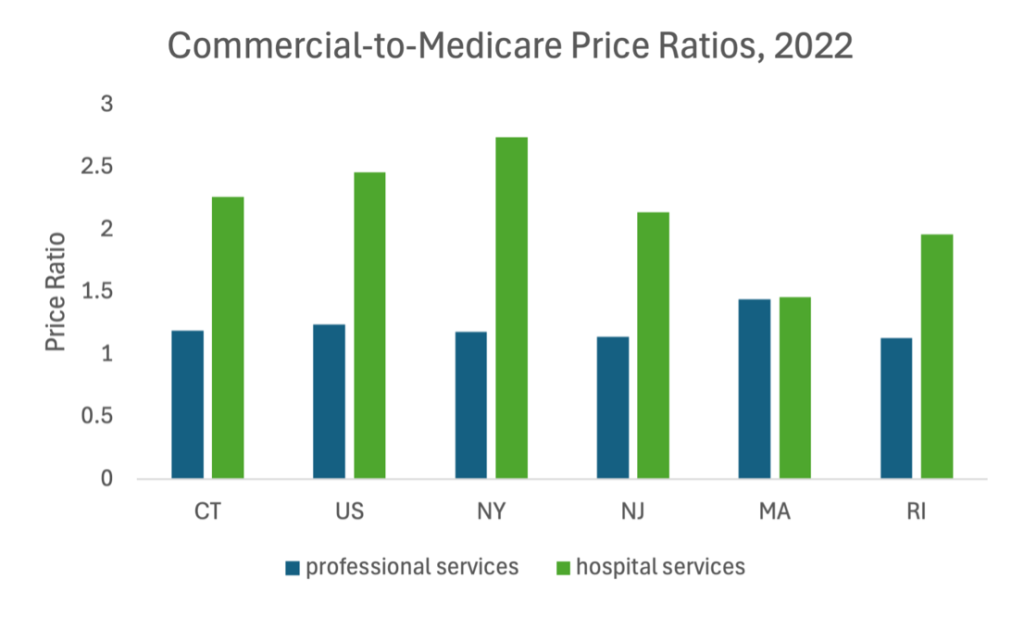
A 2025 analysis found that commercial payment rates for Connecticut hospital services average 2.17 times higher than Medicare rates. In comparison, commercial rates in Connecticut for professional services average 1.22 times Medicare rates. Medicare rates are set by actuaries to reflect the costs of delivering care.
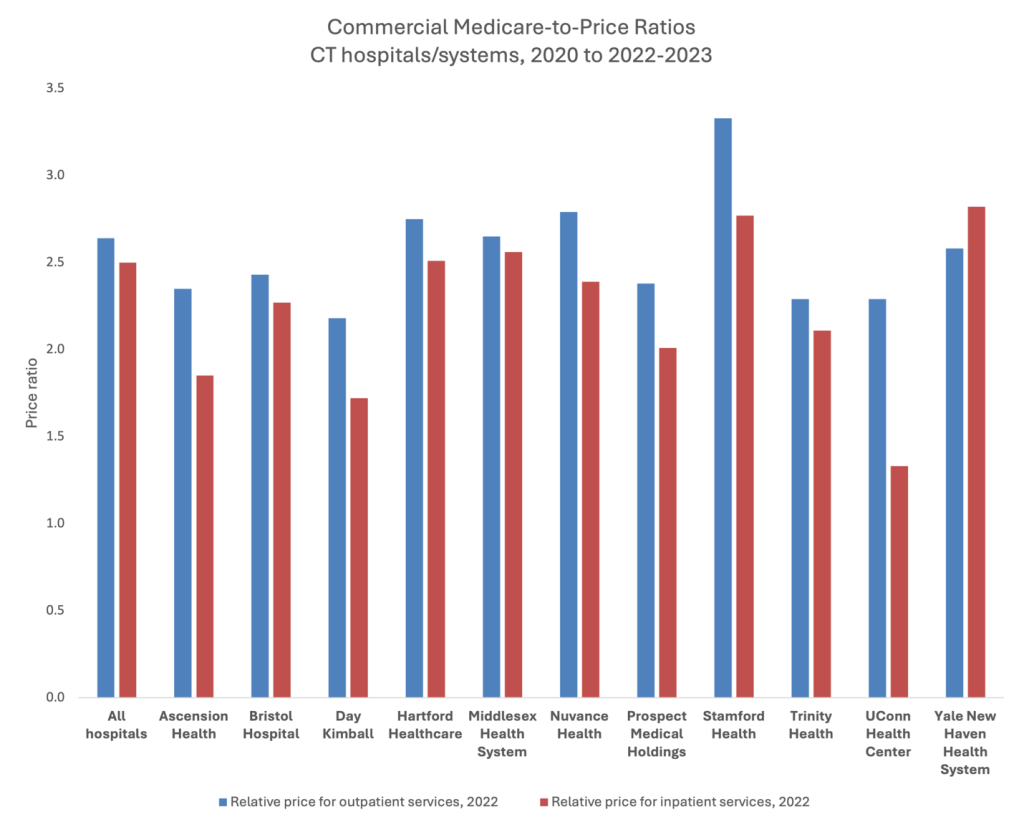
While all Connecticut hospitals’ commercial payment rates for both inpatient and outpatient services are above Medicare rates, there is variation between hospitals.
Do lower hospital Medicaid prices drive up private plan prices?
Connecticut hospitals have asserted that state Medicaid payment rates undermine hospital margins and force higher private plan rates. But the evidence doesn’t support their assertion.
As in most states, Connecticut Medicaid hospital payment rates are lower than rates that commercial plans pay. But it’s important to note that correlation is not causation. Hospital finances are complex and opaque. The interaction between factors and the influence of unmeasured factors are unclear.
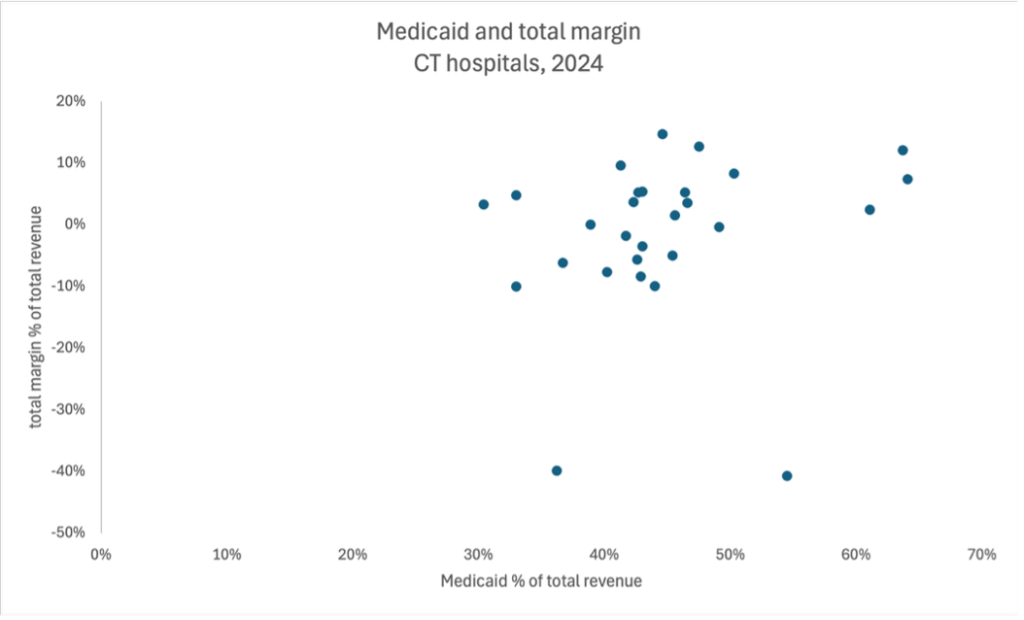
An analysis of data from the Office of Health Strategy’s (OHS) latest hospital financial report finds that, in 2024 the correlation between Medicaid’s share of total hospital revenue and total profits was 0.177, or negligible. The evidence does not support the assertion that Connecticut hospitals with higher shares of Medicaid patients have lower profits or are less financially stable.
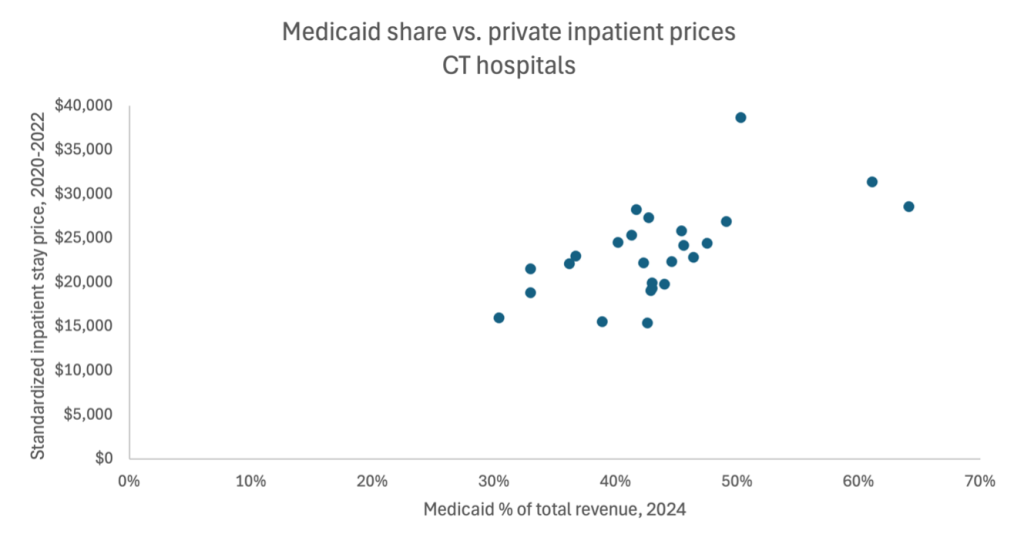
There is a moderate 0.613 correlation between Medicaid’s share of revenue (in 2024) and the standardized price of an inpatient stay paid by private plans (2020 to 2022) at Connecticut hospitals. This analysis compares OHS’s latest financial report with Connecticut hospital data from RAND’s latest analysis of hospital prices paid by private plans.
Other research finds that Medicaid payments to Connecticut hospitals are relatively generous compared to similar states.
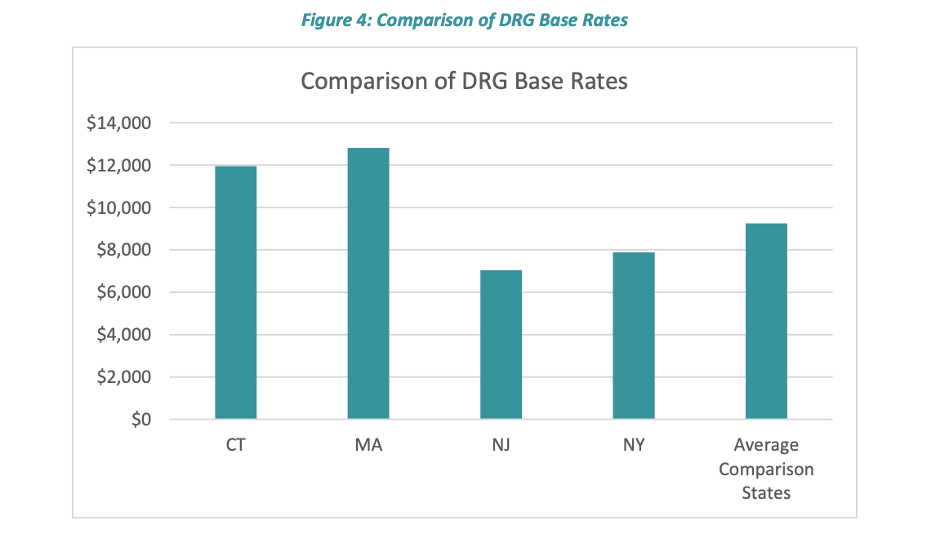
An independent comparison commissioned by the state, of Connecticut Medicaid diagnosis-related hospital base payment rates, commissioned by DSS, found Connecticut’s average rate is above the rates paid by comparison states.
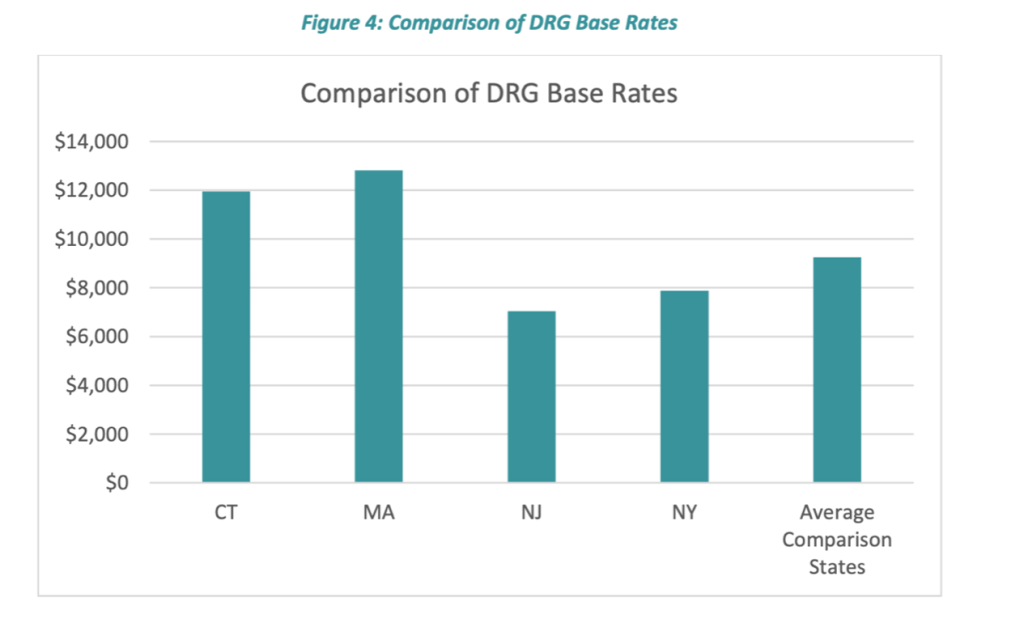
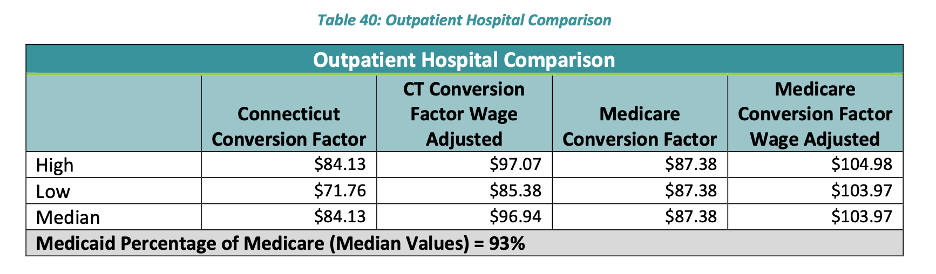
That same study also found that Connecticut hospital outpatient service Medicaid prices are very close to Medicare rates. Medicare rates are set by actuaries to reflect the costs of delivering care.
Private equity and hospitals
Over the last 20 years, private equity investors (PE) have purchased a growing number of healthcare facilities in Connecticut and across the US. PE funds are pools of privately invested money, including borrowed funds. Private equity funds have invested across the healthcare landscape, including hospitals, physician specialties such as gastroenterology and anesthesiology, and emergency medicine.
There is substantial evidence of harm, and little evidence of benefits, from private equity investment in healthcare. PE funds focus on short term profits for investors, not patient health or community safety. PE investors are attracted to healthcare because of high spending, fast growth, sizeable assets, and COVID disruptions. There is strong evidence that increasing PE ownership in healthcare is driving up prices, fueling consolidation, reducing consumer choice, and lowering quality of care. Because they’re private, there is little regulation or public information about PE deals.
Three Connecticut hospitals have struggled since 2015 when Prospect Medical Holdings, a PE firm based in Los Angeles, bought Waterbury Hospital, Manchester Memorial Hospital and Rockville General Hospital. After the purchase was approved by state regulators, it has been reported that Prospect neglected routine maintenance, did not pay their bills to providers and venders, did not pay their taxes, and borrowed over a billion dollars against the hospitals’ assets to fund dividends for investors. Connecticut was not alone in suffering harm from Prospect’s hospital ownership. Prospect’s failure to fund cybersecurity protections is blamed for an August 2023 cyberattack that crippled the hospitals and threatened sensitive patient medical records. Eventually, Prospect declared bankruptcy in January 2025. UConn Health agreed to purchase Waterbury Hospital and Hartford Healthcare purchased Manchester Memorial and Rockville General hospitals. Concerns about inadequate state regulatory oversight have been raised repeatedly.
In 2020 policymakers grew concerned about PE’s impact on healthcare and Prospect specifically. States have limited options to address PE’s harm once deals are approved. In 2026, Connecticut passed legislation to limit sales of hospital campuses in a common PE tactic to extract value from hospitals, and to limit PE funds’ control over hospitals or to interfere with clinicians’ professional judgment or clinical decisions.
Consolidation into large health systems has also jeopardized access to critical but less profitable hospital services. An important example is the closing of essential birthing centers in Connecticut, reducing access to critical maternity care in our state.
Another way hospitals are shedding less profitable services includes shifting clinics that serve low-income patients to community health centers. In one example, Yale-New Haven Hospital moved three primary care clinics out of New Haven neighborhoods to a remote site. Payment for care for the low-income clinic patients was shifted to New Haven’s two community health centers, which are reimbursed by the state at seven times the level of other providers. But patients are still seen in a Yale-New Haven facility by the same Yale-New Haven clinical staff. In addition, they now have to pay higher prices and travel farther for their care. Several other hospitals have engineered this shift as well.
Hospitals and community health
Most Connecticut hospitals are nonprofit institutions. Nonprofit status comes with more responsibility to improve the health of their community but also comes with significant financial benefits. Researchers estimate that in 2021 Connecticut hospitals received over $607 million in breaks on federal, state and local income, sales, and property taxes. Taxpayers must pay more to cover those losses.
In exchange, nonprofit hospitals are expected to devote resources to improving their community’s health. Nonprofit hospitals must report their community benefit spending to the Internal Revenue Service (IRS). The state Office of Health Strategy annually summarizes those community benefits reported to the IRS supplemented by an OHS survey of hospitals. All information is self-reported by the hospitals and is not audited.
According to OHS’s latest report on community benefits, Connecticut hospitals spent $2.18 billion on community benefits, or 13% of total expenses, in FY 2024. That is up 7.4% from the year before. However, the IRS and OHS use a very generous definition of community benefits or charity, much of which could be considered normal business expenses, that for-profit entities also absorb. Some categories allow spending in categories that benefit hospitals’ budgets and staff. In addition, almost all the reported community benefit expenses are valued compared to hospitals’ costs, which are not regulated. For instance, increasing hospital spending on new buildings and construction is incorporated into costs over time as depreciation. High hospital salaries are also included in costs.
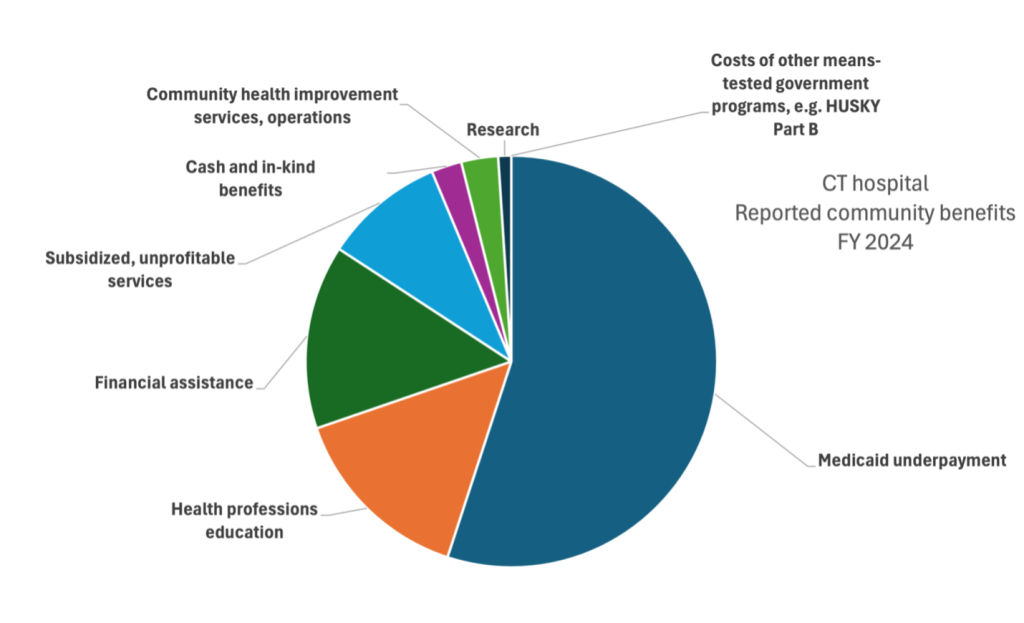
The largest contributor by far to Connecticut hospital community benefit spending (55%) is for Medicaid underpayments, compared to their reported costs. However, an independent comparison of inpatient hospital Medicaid rates commissioned by DSS found that Connecticut’s Medicaid base rates were 29.3% higher than the average of comparator states – Massachusetts, New Jersey, and New York.
Lawsuits against Connecticut patients who can’t pay their bills are down, but not uncommon. Four in five lawsuits are filed by doctors. Large systems including Hartford Healthcare, Yale-New Haven Health, and UConn’s health system have changed their policies to significantly reduce lawsuits. However, smaller practices and hospital systems continue to sue patients for sizeable sums. The debt causes significant economic harm to patients and their families. Hospitals and practices blame insurers and vice versa, leaving patients without options. People without insurance are out of luck. As federal Medicaid cuts roll out, far more Connecticut residents will become uninsured. If you are facing serious medical bills, contact the Office of Healthcare Advocate.
Under federal law, every three years nonprofit hospitals are required to develop a Community Health Needs Assessment (CHNA) assessing the health needs of the communities they serve and develop a plan to meet the needs identified. All Connecticut nonprofit hospitals have filed a CHNA with the state Office of Health Strategy. Visitors can find their local hospitals’ latest community health needs assessment here. More information on local health needs can be found at the HealthscoreCT dashboard.
CT hospital and health system key issues
The key challenge facing Connecticut hospitals are federal funding cuts from the passage of HR-1, the One Big Beautiful Bill Act, in July 2025 and subsequent federal administrative cuts and burdens.
The 2025 federal budget bill, HR-1, is expected to cut healthcare funding to Connecticut by $8.3 billion result in over 100,000 more uninsured state residents by 2035. This will bring Connecticut’s uninsured rate to a 20-year high. Hospitals can expect that far more patients will not be able to pay their bills, and uncompensated care costs will rise. In the 2026 budget, state policymakers gave hospitals an increase of $1.7 billion over the next five years.
Hospitals and health systems in other states are preparing for HR-1’s impact. Provisions include:
- Building community relationships with outreach, connecting with community health centers, food pantries and pharmacies and providing community-based health screenings
- Helping patients at-risk of losing coverage navigate the new rules and retain coverage
- Improving ED efficiency
- Preserving access to care by altering service delivery to, e.g. locations, hours, to accommodate patients fulfilling work and community engagement requirements
Hospitals will face significant financial challenges under the new federal budget but shifting costs onto uninsured patients would be counterproductive. New research finds that charity care strengthens US hospitals, including their finances. Providing maximum charity care assistance would reduce revenues by just 0.7% and much of that would be covered by increased government subsidies and lower costs.
Workforce Recruitment, Retention & Safety
In Connecticut, healthcare labor costs are up about 15% since COVID, staff turnover hovers between 18% and 30%, and nurse vacancies are up 30%. Connecticut hospitals are working with policymakers to create solutions for shortages of doctors, nurses, and healthcare workers. The causes of workforce shortages are complex. Through higher wages, improved benefits, and schedules that improve work-life balance, hospitals hope to recruit and retain vital staff. Partnerships between academic institutions and hospitals are being forged to increase opportunities for clinical training, expanded workforce, employment, and retention.
Workplace violence has accelerated across Connecticut hospitals. In 2023, the state passed legislation requiring healthcare workplaces to create staff/management committees to improve safety and to develop violence prevention plans. The law also requires reporting incidents to the state Department of Public Health, allowing staff to adjust assignments to avoid contact with patients that have harmed or threatened them, and increased penalties for assault on healthcare workers. However, healthcare workers have called for more protections.
Behavioral Health
According to Mental Health America’s 2025 rankings, one in eight (12%) Connecticut youth and 5% of adults have serious thoughts of suicide. Almost 750,000 state residents have a mental illness. But 77,460 adults with more than 14 mentally unhealthy days a month, could not see a doctor due to cost. Over half a million Connecticut adults have a substance use disorder, but four out of five who need treatment don’t get it. There is just one mental health provider per 220 Connecticut residents – Massachusetts has one for every 140 residents.
People with untreated mental illness and substance use disorder often rely on hospitals and EDs for care. Legislators and the administration are focusing attention and resources on the problem, but more needs to be done.
Infectious Diseases
In 2025, there were 48 outbreaks of measles reported in the US. On February 26, 2025, a child in Lubbock Texas died of the disease. Until then, the US hadn’t experienced a measles death since 2015. While Connecticut’s measles vaccination rates are well above the national average, it is very likely that hospitals will encounter patients with a disease many clinicians have never seen. Foreign infectious threats are growing, especially as the federal government has frozen funding for international disease surveillance and control, experts are concerned that these threats will be more likely to travel to the US. The lesson of COVID is clear that hospitals need to prepare for future epidemics. Ensuring hospitals have resources and policies to react quickly but are also monitoring their communities for emerging public health threats is critical.
Updated June 1, 2026